Saturday, August 10, 2013

10 books from the last 10 years of teaching that I can't be without....

Who am I kidding? 10 books? yeah...more like 100 books I can't teach without!  But that's not what our friends Mandy from Enjoy and Embrace Learning and Cathy from Reflect and Refine are asking us to do, right? So, I'll play by the rules. This year. Next year, I might break it. :)

As I was moving my books to my new space in a new classroom and in a new district, I kept staring at the books I've decided to pack first. I stopped unloading my suitcase just for a minute to pause and reflect on what was happening at the moment. I was moving to my new space that day. I didn't pack pencils, erasers or crayons. I didn't pack folders or tags. Instead, the first thing I made sure I had were books. Because who I am without books? What kind of teacher would I be without my books? Books are my identity. It's who I am. Reading is my life whether I'm in South America, in the States, in my classroom, or on vacation. I'm a reader. That's who I am.

I'm blessed as a teacher. I know I am. I, not only get to teach children their first words in English but I also get to help them fall in love with reading. Ding Ding Ding!!!! Jackpot! So, as I kept unpacking, I looked at the books on my table that left a mark on me in one way or another. Maybe it was the story, or the author. Or maybe it was the moment in life when I read it. Maybe it was who I shared it with or who was the first one to deliver it to my hands. Regardless of the reasons, here they are. The top 10 books that marked my teaching life in the last 10 years. I'm not describing what the book is about. Instead, I'm explaining WHY they marked my teaching or WHY it's important in my class or my reading life.
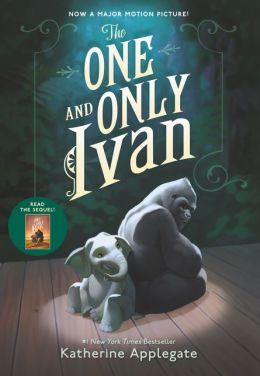

The One and Only Ivan The One and Only Ivan by Katherine Applegate. I know this is not a picture book. But it's a book I LOVE, ADORE & will continue to read aloud for the next 10 years!
Who didn't read this book and just fell in love with the characters? Who didn't drop tears with Stella? Who didn't feel optimistic and yet defeated at times? Katherine Applegate did it again. She brought a story that stay with readers of any age long after you read the last page. What I loved about this book? It made my students and I look forward to our read aloud time. It made us groan when we HAD to stop reading it for the day. It made us smile and feel sad at the same time. But we did it together. Because no matter how many times I've read this book, I felt it every time. Oh, Ivan...the One and Only Ivan.


I know you'll agree. All it takes is one read. All it takes is absorbing the story in one sitting and it leaves a mark. Henry and the Freedom Box is one of those books that have it all: descriptive, touching words and unforgettable pictures. The 5th graders in my last school would go to the Freedom Center in Cincinnati every year and every year they can't wait to see the replica of Henry's box. Another beautiful thing that happens once we get to the last page of this book is that children want to know MORE. They ask questions, they wonder about his wife, the children, how he started life again, how did he get over losing his family. Oh the questions...the burning questions. That's a sign of a story so well written-audience wants more.


Even though this book was published more than 10 years ago, I started using in my teaching about 7 years ago. I read Leo the Late Bloomer by Robert Krauss every year  at the beginning of every school year. Why? Because we all have a Leo inside. We're all trying to get better at something. As teachers, as learners, as readers, as writers, we all have something we would like to get really good at. Regardless of our personal journey, Leo the Late Bloomer celebrates the Leo inside of us, knowing that with time, practice (and without being watched all the time), we'll bloom. Even if it takes time, even if we wish we could go faster. It'll happen. Eventually. This book is my reminder that every student in my class is on his own personal journey.


Ish by Peter Reynolds is a perfect companion to Leo the Late Bloomer. Both books are so optimistic in nature. Both books celebrate approximations and embrace imperfections. It celebrates "trying" versus just getting it accomplished. It emphasizes process instead of concentrating on product. It's a great story and one that I use to remind my students that as they learn the language, figure out the new culture and try to grow as learners, their "ish" is sometimes their best A game.


 As I'm writing this post, I realized how many of the books I'm choosing has a lot to do with building community, friendships, respect and growing. This book celebrates individualism at its best. In my opinion, every book Todd Parr writes is a winner. The children adore his books, his illustrations, his great messages and his beautiful language. Many young artists are born in my class because they want to draw just like him, and give their work colorful background "just like Todd Parr." Any of his books are great! You really can't go wrong.


Do I see myself spending a whole year in my classroom and not read a Piggie and Gerald book? NO WAY JOSE! I mean, come on! Mo Willems is a complete genius. He understands children's sense of humor. He creates lovable and totally unforgettable characters. He makes us fall in love with words, repetitions and silly rhymes. Regardless of my students' age, they all ask me for a Piggie and Gerald book. And of course, they all wish for a friendship like theirs.

 Everyone knows I'm a Lincoln fan. My friends, family and students all know I have great admiration for this US President. I often wonder if we'll ever have again a president whose values and beliefs are so grounded that nothing could shake them. This kind of loyalty to his own words, his actions and goals is an amazing characteristics found in few leaders. Even though there are many "kids biographies" out there about Lincoln, I never really found one that I thought children could connect, get intrigued and enjoy. Until....famous painter Maira Kalman published this book. And the crowd says, "Amen!" Amazing addition to the library.


  I've introduced Lulu and the Brontosaurus by Judith Viorst to several teacher friends because it's so good to keep it all to myself. There are so many things I love about Lulu:
She is wild, crazy, funny, and just spoiled.
She has a caring heart but you don't see it that often.
She loves to sing.
She thinks she can sing.
She has an amazing wild imagination.
I'd love to meet a Lulu in real life. It would provide hours of free entertainment.
Contrary to popular believes, she does learn (eventually).

You got to introduce Lulu to your students. That's all I can say. :)


 I love poetry. I'd like to believe that because I love poetry (we read tons during the year) that my students love it too. I love languages, words, patterns and rhythm. I love poems. Short and small. Long and detailed. Sincere and funny ones. In Spanish and in English. I just love them. So you can imagine my excitement when this book was published in 2011. Thank you Laura Purdie Salas for writing a poetry book about my favorite topic: books! This book illuminates my classroom every year as we talk about our identity as readers and writers. Like Dr. Seuss would say, "I can read it here. I can read it there. I can read it anywhere."


 The main character in this book is Jorge. And Jorge is actually every student in my class. You see, I teach English language learners, these hard working children who got to learn how to read, write, speak, be proficient and academically up to speed all while learning a foreign language. I have mad respect for all the Jorges in this world. We all have them in our classroom.  This book provides the voice to so many silent voices. Jane Medina does a beautiful work with language in this book! These voices are silent often because they lack the words to express themselves. It's so hard to be far away from home. I know that. I understand that feeling. Because of this and many other reasons, I admire all the Jorges out there who show up every day.


Friday, August 9, 2013

Lessons on Navigating, Balancing, Teaching & Learning Part 2


Last Monday, I wrote about my summer experience of learning how to ride a bike. Yes. You read that right. You can read Part 1 of the blog post here. It was something I've been wanting to do for a long time. Yet, I was too embarrassed to admit let alone put myself out there. I reflected on this experience and started thinking about ELLs in this country. Those hard working children who are expected to learn a language (a huge task by itself) and succeed academically as well. Here's Part 2 of my thoughts, questions and reflection on this experience. Thanks for reading. 

               Lessons on Navigating, Balancing, Teaching & Learning
Part 2


On Performance, Learning Conditions and Practice

Once I’ve learned how to ride a bike, I only had the stamina for a 15 minute ride. Why? Because learning how to do something new requires a lot of strength, perseverance and patience. In other words, it wears you out. Let’s think about that state of emotional and mental fatigue. Picture this: being in an environment where the words and sounds don’t match the ones stored in your brain. You’re immersed in a world where something is new every 3 minutes. People talk. They move. They laugh. You freeze and try to breath. This world is what our ELLs face every day. It’s vital for teachers to remember to give their young language learners time, breaks, support and a smile. Yes. A smile that says, “it’s ok. You’ll get it. Take your time.”
Stephen Krashen’s Affective Filter hypothesis helped us understand about conditions of learning for ELLs. What is the affective filter hypothesis? Think of it as a wall that is built between a learner and language input. When the filter is on, the learner blocks out any language input. Factors such as anxiety, fatigue, low self-esteem and motivation will cause the filter to be on. What can a teacher do? Be supportive of approximations. They indicate thinking from the learner’s end. Celebrating approximations is making sure that affective filter stays low so that they can welcome any language input.
I started riding my bike 15 minutes a day every day.  The 3rd week of practice I was able to ride for another 30 minutes and was able to turn corners more smoothly. By the 4th week of practice, my time increased to 45 minutes, smooth rides, and an incredible amount of smiles by the end of my rides.

On finding support & scaffolding

I felt like Leo many afternoons. I didn’t want to be watched. I wanted to try this on my own.  Until I had questions that Google couldn’t answer. I needed guidance. I needed modeling. I needed support. Once I could ride my bike, I could only go straight for so long. At one point, I had to turn. At one point, I had to gain a deeper understanding of the brakes so I could stop smoothly before crossing streets. I felt overwhelmed. Learning is social. It makes sense that I’d need someone to help me reach further and deeper into my learning and goals. When teaching ELLs, we have to consider the immensity of their tasks: learn a foreign language and demonstrate understanding and knowledge of academic contents. Not a small task.  When teaching ELLs, let’s consider these questions: Who are their resources? Who can support during school? Who is someone they can trust for questions, support or simply a friend? Are students giving a chance to ask for help and clarification during lessons? Are they offered different ways to show their understanding?

As I mentioned above, Roberto Marzano’s nine essential instructional strategies not only included setting up objectives but also talked about the importance of feedback. All learners need to know how they are doing, what’s working, what needs more practice. Feedback has a tremendous influence on students’ performance. If we keep our eyes open constantly for signs of blooming, as Robert Krauss would say, we would always be able to see something that needs to be celebrated!
My friend Olga was that support for me. She cheered me on every mile that I accomplished. It’s true Mr. Lennon, “ I’ll get by with a little help from a friend”. So next time you sit by your dear ELL, remember the journey he’s going through.  Learning is such a ride and no one needs to do it all alone.


Monday, August 5, 2013

Summer 2013: Lessons Learned while Riding a Bike


Lessons on Navigating, Balancing, Teaching & Learning
Part I
By Stella Villalba

It was summer of 2012.  A loud, dark and intense thunderstorm hits Columbus, Ohio. It happened fast. The winds were strong. We knew about that 30% chance of thunderstorm but that could’ve also meant 70% of good weather. I decided to focus on that 70% chance and decided to still venture out for dinner. The city was covered in a shade of gray that makes you wonder how much time you have to do anything: to seek shelter, to drive back home, to wait it out. The storm came as strong as that 30% chance predicted yet stronger than what we all expected. It brought down trees and power. The city lost power.  Next thing I know, I’m in line with 20 other people at the store buying flashlights and batteries. The rumors: we would be without power for at least 5 days.

What to do in the next 5 days without power? Well, this is where creativity kicked in. I love to journal and love working with pictures. These were all perfect activities to be entertained during the day. But during nighttime, it provided a different kind of problem. Until it hit me. Just like that storm that hit Columbus. The idea came rushing to me, feeling fast and energetic. With this new idea the numbers were in reverse: 70% chance I could make this work. 30% I’d fail. Sounds like any idea in real life, actually. But you see, I’ve been carrying this secret for many years. Too afraid and embarrassed to confess it to anyone, I kept it all to myself. Just like a child after a mischievous act doesn’t want to confess. I felt like that child. It was hard to admit to anyone that I, soon to be 37 years old, didn’t know how to ride a bike.

However, there was a BLACKOUT on its way. My neighborhood was going to be covered in pitch-black skies as soon as the sun came down. Too embarrassed to learn how to ride in public, this blackout provided the perfect blanket for me to bloom as a learner. The darkness would be my best friend for the next 4 days. All of a sudden I couldn’t wait for the hours to pass by and for nighttime to begin.  I already owned a bike, a purchase I made years ago when I decided I wanted to learn how to ride bike. I never used it. Too embarrassed to expose myself to the ridicule of me falling when trying to balance on a bike. However, this time I took it out, dusted it off, and decided it was time to put this little companion to good use. I read somewhere that “when the learner is ready, the teacher shows up.” I was ready.

On Being Vulnerable
Making a decision to do something that most people may already know how to do (but you) is the 1st step in growing. This decision made me think about learning, about my students, about embarrassment and the conditions for learning. What does it feel like to be 10 years old and have to learn the ABC in another language? How does it feel to watch everyone else do something with so much ease, except for you is a mountain of hard-work? Do they want to hide like I did? Do they prefer not to be watched all the time while learning?

While I was learning how to ride my bike, I remembered several lines of one of my favorite read alouds for building community: Leo the Late Bloomer by Robert Kraus. In this book Leo couldn’t read, couldn’t write his name, was a messy eater and hasn’t learned to say a word.  Dad was worried and watched him all the time for “signs of blooming.” Mom, however, knew that Leo just needed time. Over time Leo absorbed what others have been doing and eventually blossoms with a newfound love for life. Many of our ELLs students start with a quiet Leo inside of them. Their knowledge or lack of knowledge is exposed. Their success is measured by their understanding of the English language. A 10-year old child who was an accomplished reader and writer in his home country may find himself in a foreign place where he is not sure he belongs. He has to learn the basics starting with the alphabet. It’s important to remember how already vulnerable these students feel even if they lack the proper words to communicate those feelings. They will bloom eventually but they’ll need TIME to absorb and process. This time is not linear and rigid. It comes with twists, turns and falls. All of which I’ve experienced learning how to ride a bike as an adult. Sometimes a pat on the back, a high-five, a “well-done” is all it’s needed to recharge energy and try again the next day. 

****Come back Friday for Part II of this blog post. More in reflecting on this experience, teaching and the parallels between both journeys!****

Monday, June 24, 2013

Journaling My School Year (Looking Back & Looking Ahead)

Many of my friends know that I love to journal, I love art and I find it very reflective and calming. I also love art and usually find inspiration in the tiniest things. I also love to scrapbook but in its simplest form. I care more about the writing and the process of writing things down than on the cute little things that go on the page. Don't get me wrong...I love details BUT when it comes down to journaling, I focus on the content, on my words.

Last school year (2012-2013) was our first year implementing and using the Common Core Standards in grades K-3 and since I teach all the English Language learners in my school building, I knew I had an overwhelming task ahead learning the new standards, implementing them and learning as much as I could along the way. Overwhelming is an understatement but one thing helped me along the way: carving the time to write things down.

I wanted this learning place to be a visually appealing place for me to write. A place where I would WANT to write. It sounds silly but sometimes you got to do what works for you, right? So, one of the things I did ahead of time was collect the small cards/journaling pieces. I had a date stamp, a glue stick and a good pen with the journal at all times so there was no excuse for not doing it. This is not a "promote Smash Books" blog post but I do love their journals for how flexible and convenient they are.  One of the first things I did on the journal was work on the cover. I added one of my favorite quotes on teaching by Penny Kittle. It reminds me of what this profession/calling is all about.


"I believe you’ve got to do what’s right, every single day of your life, even if the rest of the crowd isn’t. Teaching is about honor and goodness and mercy. It really is. And no one will be watching you most of the time. You either live up to the calling of this profession or you don’t, and most likely no one will ever know but you. But it matters because the kids are counting on you.” 

                           from The Greatest Catch: a life in teaching, Penny Kittle, 2005 


Then the process of documenting my learning began! I know that I could've done this "documenting process" on my blog but the fact that I had this journal with me all the time, allowed me to write on the spot when I was ready or with my students' during Writing Workshop (if that worked at the time).
Another thing to consider is the fact that I LOVE to take pictures. For me a picture is worth more than a thousand words. I have my iPhone and/or my camera with me all the time. I probably take pictures of my students every day. I'm such a process kind of person that as long as I take a picture, I'd remember what happened.


 The small journaling cards made it less easier and less intimidating to  journal on the spot. There were times I wanted to do a quick write and the cards worked great. Other times, I had more to say and I've just used all the space on the page. Regarding the photos, I set alarms for myself to remember to back up my pictures and upload them on Snapfish at the end of each month. This allowed me to have those pictures at my fingertip. It's a system that worked for me because otherwise I'd totally forget to upload them. :)

Some of the pictures were of the students involved in an activity/strategy. Other times, I took pictures of their work or of the charts we've created together. I can't emphasized enough how helpful this was for me, especially because there were several new things I got to teach this year that I've not taught before. I knew that I was going to make plenty of mistakes along the way. Some things were going to work and other things were just going to be pitched. There were going to be celebrations and frustrations all along the way. I expected that. I embraced that. I knew I wasn't alone in this journey since so many teachers across the country are exploring the new Common Core State Standards and what it meant for them and their daily teaching lives.


Some of the new units/concepts/big ideas I got to teach this year was going more "in-depth" with informational writing with young/emergent ELL writers. I absolutely loved the outcome but I won't deny it...it was hard work....for all of us. I put myself as a writer in that process as much as I could. I wanted to try out writing a "closing statement" with them as much as I could.
Another new piece for our learning was writing Opinion Writing with 1st and 2nd graders. What a journey that was! Oh boy! At the beginning I wasn't too sure that these writers were ready for it. I wasn't sure if that was developmentally appropriate. I was wrong. They GOT it. And all these lessons are worth documenting so when I'm in that process again this year I'll remind myself that they CAN do this. They GOT this. I know....each writer is different. each year is different. each process is different. But throughout the school year it's so easy to get overwhelmed or cranky or negative about things when we got so much on our plate. I'm keeping it real. Maintaining a positive attitude about things is not easy at times but I know myself as a learner, as a person and as a teacher. I know what works for me....and having a place to look back on our previous journey helps Me...it keeps myself align.

This upcoming school year I have new adventures to face: a new school district, a new position, new students, new staff...so much of my journey involves the word NEW. Now more than ever, I need to document this process. I haven't been in this position in 10 years. I've forgotten what it means to learn things from zero, to be new at everything, to look at a form with foreign eyes. But I DO believe that this is what keeps the spirit young and renewed. Summer is the perfect time to prepare that new journal, to think about the process and find a system that works for you. I know that this is true for me...and that is exactly what I'm working on.

Enjoy the journey. Carpe Diem.


Monday, May 27, 2013

2012-2013 What happened to you? where art thou?

Somewhere I read that..." life is what happens when you are busy making other plans." Whoever said this is a genius.  As I look back on this blog, my last post was Sept. 9th where I shared my reading life and what I was planning to share with my students. Here's is the thing: I've never stopped writing since Sept. 9 but a lot of "writing" happened in my head as I navigated my life from moment to moment, from exploration to discover, from failures to success, from cheers to solitude moments. But I couldn't make this "writing" or "thinking" public because I was still sorting all of it out. I was sorting the happenings, the occurrences, the silences and the roars. I was trying to put them in perspective, in making sense of it all. I lost. I gained. I rose. I fell. I laughed. I cried. I thought. I refused. I rose again. Welcome to the life of a teacher, right? I'm sure I'm not alone in my journey. Even though all this writing is general, without referring to something specific that happened, all I can say is "Life is what happens when you are busy making other plans."

So what have I learned? Well...those are the posts that will come in the near future. I wrote at the beginning of the year and I'm writing at (almost) the end of the year. Most blogs would've chosen to do something in between. But my "in-betweens" this year was filled with questions, confusions, and a lot of "I don't know's" You are probably thinking it would've been great to documented all of that. And yes, most people would've chosen that path. However, like our students, I needed time to process things in my own time, in my own soul and mind. How can I grow or learn if I don't let the words sink in me?


Sometimes we need to learn to enjoy the solitude....the silence....the roars. So that when we make a come back, we come back strongER.

I'm back. strongER. clearER. I can't wait for these unwritten words to document itself out.

Thanks for being there. far. or close. farthER. or maybe closER.
Enjoy the journey. I know I still do.

John Lennon...you were right. Thanks.